Our proven approach to the removal of Active Pharmaceutical Ingredients (APIs) from side streams
Actively preventing pharmaceutical compounds from entering the environment (Pharmaceuticals in the Environment, PIE) within water streams and water treatment contexts.
Modern medicine has significantly improved global health: people live longer, recover faster and can manage diseases that were once fatal. For this progress, we can be genuinely grateful.
However, the growth of the pharmaceutical industry has also introduced an unintended challenge: Pharmaceuticals in the Environment (PIE). The release of pharmaceutical compounds into the environment poses a threat to both natural ecosystems and human health, as well as to water quality.
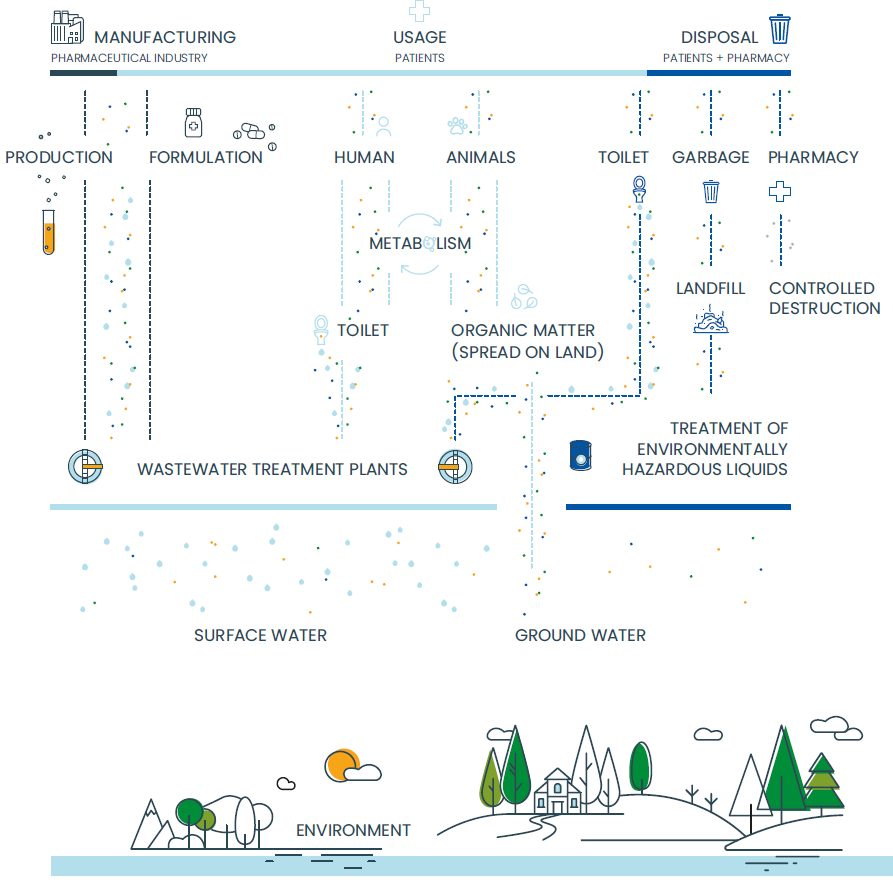
Active Pharmaceutical Ingredients (APIs) enter the environment primarily through three pathways, as shown on the figure:
- Manufacturing
- Usage
- Disposal
Of these, manufacturing contributes the least, while usage and disposal account for the majority of API release into water streams.
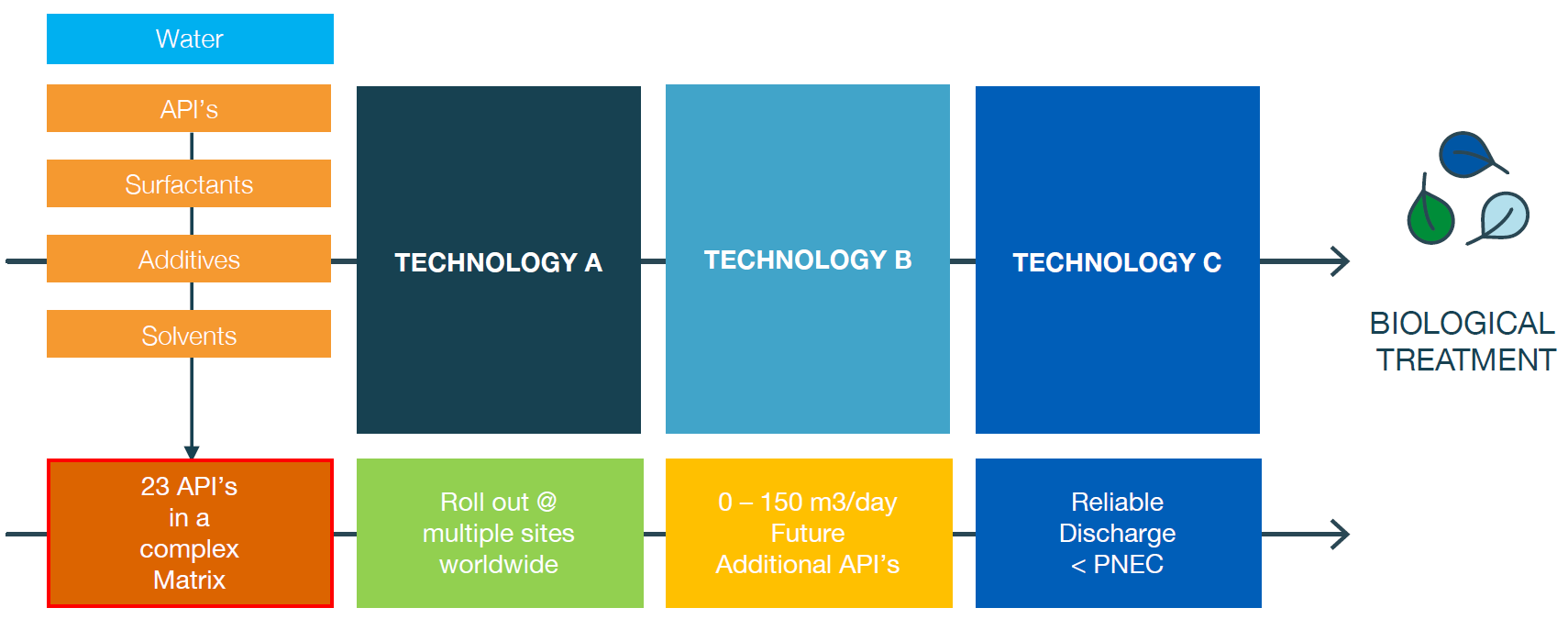
Under current EU regulations, the pollution caused by end-users is addressed through the polluter pays principle. At the same time, manufacturing and formulation sites are also obligated to minimize PIE. During API production and formulation, wash water often contain API traces that end up in wastewater and water treatment systems. Today, most of this wastewater is managed through incineration – an energy-intensive, expensive, and unsustainable solution.